


When you buy a bike at a shop, it’s common to get a basic adjustment: making sure the frame is your size, that you can pedal comfortably, and that your position is safe to ride. And that’s fine… to start with.
But if you want to take your performance to the next level, minimize injury risk, improve your aerodynamics, and squeeze out every watt of power you have, you need more: a professional cycling biomechanical assessment, also known as a professional bike fit.
In cycling, every millimeter counts. Cycling biomechanics studies how your body interacts with the bike: how your knees align when pedaling, how your hip flexors work to hold a sustained position, how your posture affects the airflow around you. A professional bike fit analyzes all of this and translates it into specific adjustments just for you.
What exactly is a professional bike fit?
A professional bike fit goes far beyond “hopping on the bike and seeing how it feels.” It’s a detailed, data-driven analysis that takes into account your anatomy, flexibility, injury history, and goals (whether it’s a long-distance triathlon, a time trial, a gran fondo, or just riding comfortably on your weekend routes), as well as the characteristics of your bike.
In our studio, we use cutting-edge tools like Cycling 3DMA, a high-speed 3D analysis system that captures your motion in real time at 100 frames per second. This system uses 4–6 motion capture cameras and strategically placed markers on your body to analyze how you pedal, how you move, and which small misalignments might be limiting your performance or causing you discomfort.As former pro cyclist and Ironman Magnus Backstedt explains, “A bike fit isn’t a luxury: it’s the key to riding stronger, getting injured less, and enjoying your time on the bike more.”
Why isn’t a basic adjustment enough?
Every cyclist is different. No two bodies are alike: your leg length, hip flexibility, knee alignment, or even your daily routine all influence how you adapt to your bike.
Many of the problems we uncover during a biomechanical assessment are related to everyday habits: spending hours sitting at a desk or traveling can shorten your hip flexors, which affects your position on the bike. Old injuries, crashes, or even how you set your cleats can create imbalances that over time lead to knee pain, lower back discomfort, or neck tension.
A good bike fitter not only has the right technology, but also the expert eye to interpret the data and, most importantly, to listen to you: your sensations, priorities, and goals.
What is analyzed during a bike fit?
In a professional bike fit session, we evaluate your entire interaction with the bike:
- Cleats: We adjust their position to prevent knee strain and make your pedal stroke more efficient. In some cases—such as during competition season—it’s wise to leave cleats mostly as they are to avoid knee issues or loss of confidence ahead of upcoming events.
- Saddle: Saddle height and setback can mean the difference between powerful pedaling and lower back pain. Sometimes just moving the saddle 2–3 millimeters makes a big improvement.
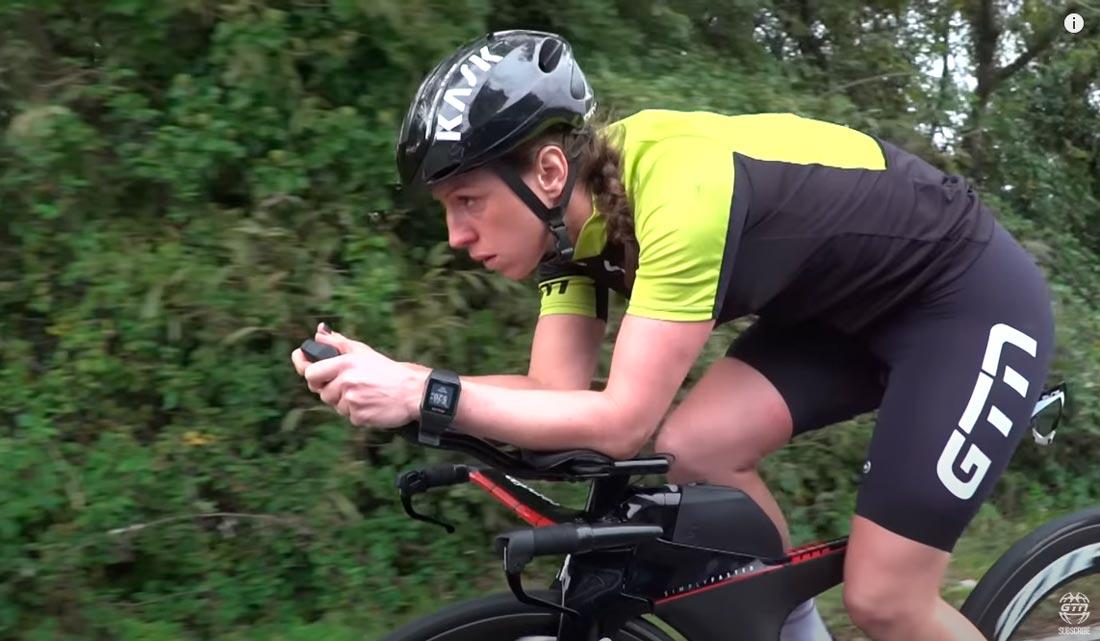
- Handlebars and extensions: In triathlon and time trialing, hand, elbow, and shoulder position directly affect aerodynamics. “A cyclist once lost the Tour de France because his wrists were open, creating more wind resistance,” says Backstedt.
- Hip flexors: Many people have limited hip opening, which makes them lean more to one side while pedaling. This is common among those who spend long hours sitting.
The goal is to find a position that maximizes your power, improves your aerodynamics, and keeps you comfortable for long hours on the saddle.
What technology is used in a biomechanical assessment?
Cycling 3DMA is a revolutionary tool for performing bike fits with millimeter precision. Thanks to its motion capture cameras and advanced software, it shows exactly how your body moves while you pedal. A typical session involves:
- Placing reflective markers on key points of your body so the cameras can record every movement.
- Pedaling for a minute so your body “settles in” to the bike as it would in real conditions.
- Recording 30–40 seconds of data in your power-generating position to analyze it in detail and make the necessary adjustments.
- Repeating this process until we find the optimal position.
This technology doesn’t replace the expert eye, but it provides objective data so the fitter can make the right decisions.
Small changes, big results
A professional biomechanical assessment can help you:
- Improve comfort on long rides.
- Prevent injuries to knees, hips, back, and neck.
- Get the most out of your bike, especially in triathlon and time trialing, where aerodynamics are key.
- Increase your efficiency, turning each pedal stroke into more speed.
Many cyclists are surprised by how just a few millimeters here and there can make a big difference in how they feel at the end of a long ride or how their race times improve.
Check your position regularly
Your body changes over time. Flexibility, strength, possible injuries, or even a long break from training can alter your ideal posture. That’s why we recommend checking your position at least once a year—or whenever you change your bike, saddle, shoes, or after an injury.
When was the last time you checked your position on the bike?
Tell us: what bothers you most on long rides? Do you feel knee pain? Back discomfort? Tingling in your hands?
Book your professional biomechanical assessment with Cycling 3DMA through one of our partners today and discover how small changes can transform your experience on the bike.
If you’d like more information about partners in your area, feel free to contact us.