


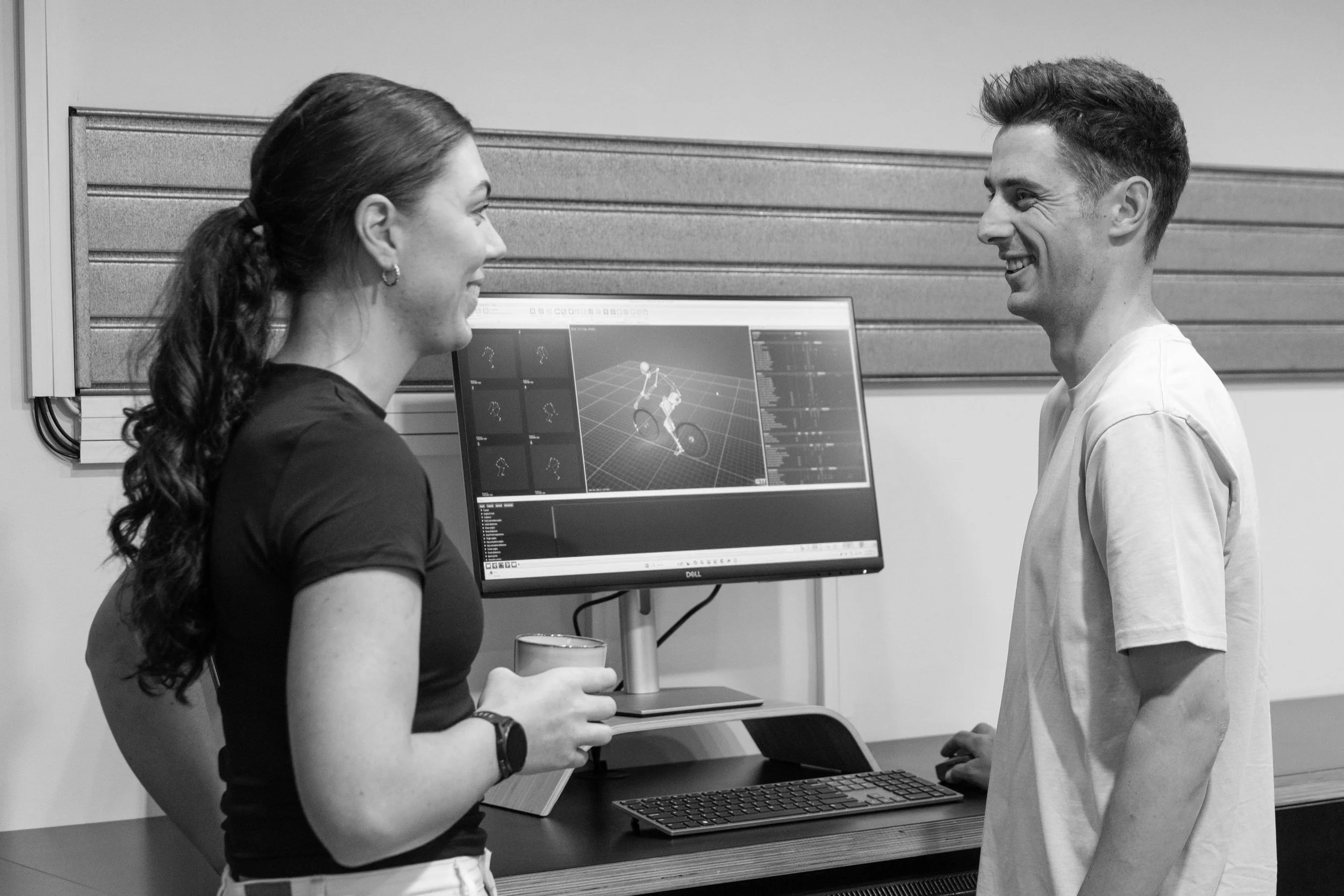
In the competitive world of sports, Adaptive Human Performance (AHP) stands out as a multidisciplinary centerdedicated to optimizing human movement through science, data, and technology. The philosophy at AHP is simplebut profound: movement is measurable, and performance can be optimized using evidence-based analysis. This vision drives AHP to employ advanced Motion Analysis Systems to bridge the gap between subjective assessmentsand objective, data-driven insights, empowering coaches, clinicians, and athletes to make informed decisions.
Among these solutions, the 3D biomechanical system 3DMA by STT Systems has become one of the mostadvanced on the market. It combines 3D mocap system capabilities, discipline-specific protocols, and automatic reports to save time and deliver a superior level of service. This case study demonstrates how AHP has integrated 3DMA to transform its approach to sport biomechanics, achieving measurable, differentiated results backed by STTSystems’ innovative technology.
The Team Behind Adaptive Human Performance
| Erin Macdonald | Exercise Physiologist & Bike Fitter | Running biomechanics, injury prevention, endurance training, sports biomechanics | Worked with World Tour teams like Bora Hansgrohe and Arkea Samsic, as well as the French National Cycling Team. Designs personalized, data-driven programs for each athlete. |
| Jordan Villani | Sports Scientist & Bike Fitter | Bike fitting analysis, performance physiology, cycling mechanics | Former elite road cyclist and national pursuit champion. Athlete at the Victorian Institute of Sport. Combines athlete and scientist perspectives to maximize comfort, efficiency, and injury prevention. |
Together, Erin and Jordan have positioned AHP as a reference center for athletes of all levels, from recreationalcyclists to elite professionals. Their integrated approach emphasizes the combination of Motion Analysis Systems, technology, and human expertise to enhance performance and reduce injury risk.

Redefining the Analysis Process
Traditionally, biomechanical assessments required complex setups with reflective markers and extensive calibration. Adaptive Human Performance has embraced Markerless Motion Capture, simplifying and accelerating motionanalysis while maintaining scientific precision.
This technology allows athletes and patients to move naturally, without markers or restrictive setups. As a result,workflows are faster, and data quality is higher across a range of movements, from sprinting and jumping to bikefitting analysis and rehabilitation.
By using Markerless Motion Capture, AHP ensures realistic assessment conditions, providing a true representationof each individual’s biomechanics.
From Data to Insights: The Power of Automatic Reports
One of the most transformative features of the Adaptive Human Performance (AHP) workflow is automatic reportgeneration. These reports translate raw kinematic data into actionable insights, summarizing joint angles,asymmetries, power generation, and movement variability with intuitive visualizations.
Instead of spending hours manually processing and interpreting data, Adaptive Human Performance (AHP) professionals can instantly access comprehensive reports, compare sessions, and track improvement over time. This automation not only increases efficiency, but also standardises the biomechanical assessment process, ensuring consistency across different assessments.
Automatic reporting has become an indispensable tool for both clinicians and coaches who rely on precise,reproducible data to design personalized training or rehabilitation programs.
Applying Motion Capture to Sport Performance
The use of Mocap in sports analysis has opened up new dimensions for understanding performance. Adaptive Human Performance (AHP) applies motion analysis systems especially in cycling, but also in other disciplines.
Through detailed analysis, Adaptive Human Performance (AHP) identifies specific biomechanical inefficiencies thatmay limit performance or increase the risk of injury. For example, when evaluating pedalling technique, the systemprovides quantifiable data to refine movement patterns and optimise the cyclist’s performance.
Bike Fitting Analysis
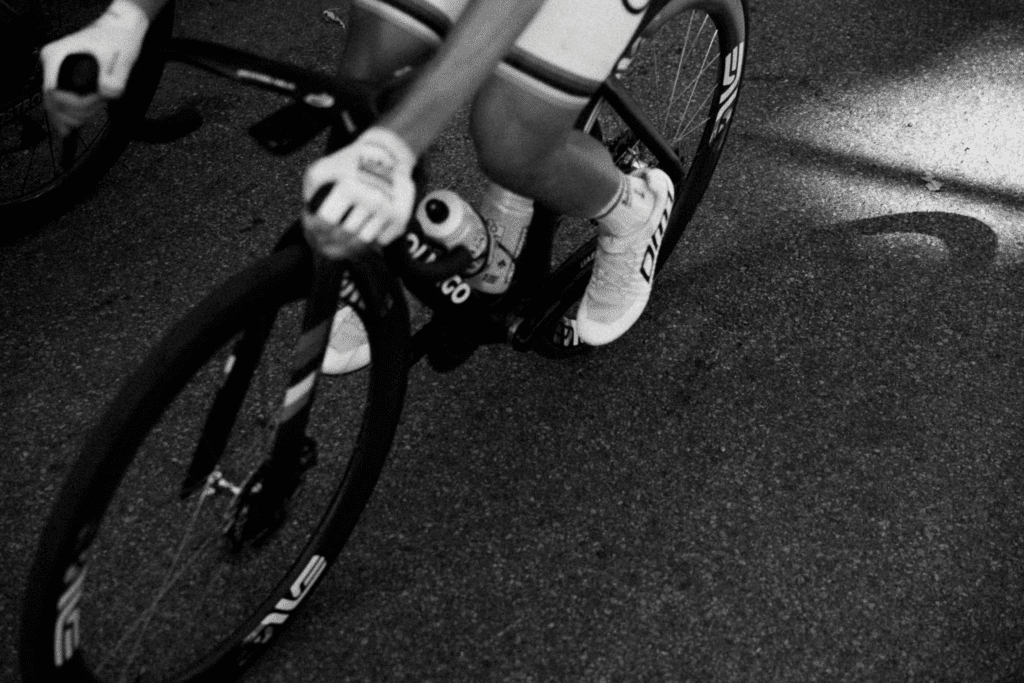
Cycling is a sport where every millimetre counts. An incorrectly adjusted saddle height or an inefficient pedallingpattern can lead to reduced performance or repetitive strain injuries.
Adaptive Human Performance (AHP) leverages 3D biomechanical analysis of bike fit to optimise rider ergonomicsand mechanical efficiency. By combining 3D motion capture systems with real-time motion tracking, AHP analysesbody angles, joint trajectories and power distribution throughout the pedal stroke.
The result is an evidence-based bike fitting process that improves comfort, prevents injury, and maximises powertransfer by combining biomechanical precision with athlete feedback.
This fusion of sports biomechanics and practical application has made AHP a go-to centre for cyclists seekingcomfort and performance through scientific evaluation.
Rehabilitation and Functional Re-Education
Beyond sports performance, AHP integrates motion capture technologies into clinical and rehabilitation settings. After an injury, restoring functional movement patterns is just as important as regaining strength.
Through motion analysis systems, AHP objectively monitors the recovery process, identifying compensatorymechanisms and ensuring that re-education focuses on restoring natural movement. Professionals can trackprogress using automatic reports, providing both the therapist and the patient with tangible, measurable data onimprovement.
The integration of ergonomics and biomechanics in rehabilitation ensures that each intervention is designed torestore both performance and comfort, reducing the likelihood of re-injury.
The Role of Technology: STT Systems and the 3DMA Platform
Behind Adaptive Human Performance’s precision lies cutting-edge technology. AHP’s biomechanical laboratoryoperates with the 3DMA system developed by STT Systems, a global leader in Motion Capture and Biomechanics 3Dsolutions.
STT Systems has a long-standing reputation for delivering accurate, flexible, and scalable motion analysis tools forresearch, clinical practice, and sports science. Their 3D biomechanical system combines optical and inertial data tocapture full-body motion at high speed and resolution, providing unparalleled biomechanical insight.
The 3DMA platform allows AHP to perform real-time sport analysis, bike fitting analysis, and rehabilitationassessments with scientifically validated protocols. From Markerless Motion Capture to synchronized EMG andforce plate integration, the system enables a holistic understanding of human motion within a user-friendly,automated interface.
Why Motion Capture Matters in Modern Biomechanics?
Mocap is no longer reserved for elite research centers. Its accessibility, accuracy, and versatility have made it a coretool in the professional biomechanical workflow.
By combining 3D mocap systems with intelligent data analysis, professionals like those at AHP can objectivelymeasure parameters such as:
- Joint angles and ranges of motion.
- Symmetry and coordination.
- Force distribution and timing.
- Postural alignment and ergonomics.
- Efficiency during sport-specific actions.
Such metrics are essential for designing targeted interventions, validating performance gains, and ensuring thattraining and rehabilitation programs are grounded in measurable biomechanics.
Bridging Performance, Prevention, and ErgonomicsThe integration of sport biomechanics, ergonomics, and rehabilitation defines the next generation of motionanalysis. Adaptive Human Performance uses biomechanical data not only to enhance athletic performance but alsoto prevent injury and promote long-term sustainability in movement.Athletes are not the only beneficiaries. Coaches, physiotherapists, and sport scientists all gain from an objective,data-rich understanding of how the body moves under different conditions.The synergy between Motion Analysis Systems and human expertise creates a feedback loop: movement datainforms practice, and practice refines performance.

STT Systems: Pioneering the Future of Biomechanics
STT Systems is a leading company in the biomechanics and 3D motion capture industry. Their mission is to provide professionals worldwide with scientifically accurate, easy-to-use motion analysis tools. These solutions are applied in various fields, from sports performance to clinical rehabilitation and industrial ergonomics.
The 3DMA system, used by AHP, is a clear example of STT’s commitment to innovation. With its markerless motion capture, automatic reporting, and advanced analytical capabilities, 3DMA allows professionals to visualize, quantify, and improve human movement in a way that is more accessible than ever before.
The use of the STT Systems 3DMA system in centers like AHP demonstrates how technology can transform data into decisions, movement into knowledge, and biomechanics into tangible progress.
Data-Driven Performance for the Modern Professional
Adaptive Human Performance represents the convergence of science, technology, and human potential. Through advanced Motion Analysis Systems and the 3DMA platform by STT Systems, AHP provides an evidence-based framework that enhances sport analysis, bike fitting, rehabilitation, and ergonomic optimization.
For professionals entering the field of sport biomechanics, AHP’s model illustrates how motion capture technology can elevate both clinical precision and athletic performance. And for experts already working in performance analysis or rehabilitation, it reinforces the essential role of measurable data in decision-making.
In the end, motion defines who we are. Understanding it through the lens of biomechanical science and technology allows us to move better, perform better, and live better.
Smart Training: How Biomechanics Transforms Your Business
If you are a sports scientist, clinician, or performance specialist looking to integrate objective data and advancedtechnology into your daily practice, discover how STT Systems’ Motion Analysis Systems can elevate your work. Ourteam will help you find the best 3D biomechanical system to match your research, clinical, or performance needs. Get in touch with us today to learn more about the 3DMA system and how it can transform your approach tosport analysis, bike fitting, rehabilitation, and ergonomics.