


In modern sports performance, “data” has become a recurring theme in strategic discussions, yet few organisations successfully translate it into decisions that deliver measurable results. David Funes Pol’s work at 4DSAB Biomecánica in Tenerife stands out as an example of how to make this happen, not through slogans, but through a structured methodology.
4DSAB is not simply a centre that “uses technology”. It is an organisation where technology serves the scientific method, and the scientific method is directed towards a single objective: optimising physical performance sustainably, measurably and in a way that reflects the athlete’s actual circumstances. This is the essence of the applied sports biomechanics practised at the centre.
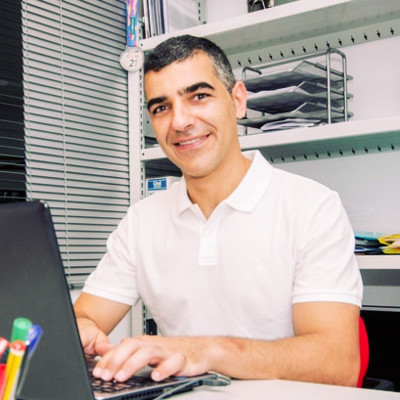
Science: The Foundation of David Funes Pol’s Work
Since its foundation, 4DSAB has operated on a clear principle: evidence is non-negotiable. In an environment saturated with trends, fashionable devices and metrics taken out of context, every intervention carried out by David Funes Pol is grounded in applied research, biomechanical analysis and sound physiological principles.
Holding a PhD in Physical Activity and Sport Sciences and a PhD in Exercise Physiology from the University of La Laguna, Funes combines university teaching, research and hands-on experience in athlete assessment and training planning. This dual perspective, spanning both the laboratory and the sporting environment, enables him to translate complex academic concepts into practical decisions concerning strength, endurance, technique and sports injury prevention.
Within this framework, technology is a means to an end, not an end in itself. One of its key foundations is the 3DMA Sport system, which brings kinematic analysis to the level of precision required in elite sport and scientific research.
Running Kinematic Analysis: Validating Technology in the Classroom
One of Funes’s most representative applied biomechanics projects is the research study Application of Running Kinematic Analysis in Physical Education and Technology, presented at the 3rd International Congress on Health and Sport Sciences.
The study starts from a contemporary reality: the widespread use of mobile phones equipped with high-speed cameras among secondary school students. If the technology is already in their hands, the question is not whether it should be used, but how it can be integrated rigorously into the educational process.
The team compared data from free software with recordings obtained using the 3DMA system and passive optical markers, considered the gold standard in motion analysis. Measurements focused on the sagittal plane and included:
- Maximum knee flexion at initial contact.
- Knee flexion during the stance and flight phases.
- Foot strike pattern.
- Trunk inclination.
- Ankle dorsiflexion.
No statistically significant differences were found between the two systems, a finding with two important strategic implications. First, it validates accessible methodologies for classroom use, making biomechanical analysis more widely available without compromising reliability in certain contexts. Second, it reinforces the role of 3DMA as a reference system for validating tools and procedures.
The findings resulted in oral presentations and poster presentations at national and international conferences, as well as book chapters published in edited volumes. Technology supports scientific output, and that research, in turn, informs professional practice.
Applied Cycling Biomechanics: Precision in Every Pedal Stroke
While the running study focused on methodological validation and wider educational applications, Funes’s kinematic analysis in cycling sought to optimise technique and reduce risk factors associated with the repetitive movements of pedalling.
In the study The Effect of Heel Lifts with Different Drops on Lateral Knee Displacement and Pedalling Dynamics, presented as an oral paper at an international conference, the impact of introducing heel lifts with heights of 1, 2 and 3 cm into cycling shoes was analysed while participants pedalled at 120 watts.
The participants were cyclists covering approximately 150 km per week who presented limited ankle dorsiflexion and dynamic knee valgus. Before the dynamic analysis, an Overhead Squat Test was performed to assess mobility and joint alignment in context.
Recordings were made using 3DMA at 100 frames per second, with and without each heel-lift height. The analysis covered:
- Sagittal plane: knee and ankle flexion and extension, anteroposterior hip displacement, and knee position relative to the pedal axis.
- Frontal plane: lateral knee movement, the knee–M5 relationship, and displacement relative to the centre of the bicycle.
The 2 cm heel lift reduced knee valgus in the frontal plane, improving dynamic alignment. The study also introduced a new metric: the frontal distance between the lateral femoral condyles. This measurement combines the distance of both knees from the centre of the bicycle when the crank is positioned at 90 degrees.
This is where biomechanics moves beyond description and becomes prescriptive: technology does not simply measure; it generates knowledge that can be applied in practice.
The work also enabled saddle height to be adjusted to keep knee extension within a healthy range of 140 to 150 degrees. It is an example of how kinematic analysis can be integrated with technical adjustments and overload prevention to support evidence-based bike fitting.
From Kicking Technique to Injury Risk: Using Football Kinematic Analysis to Anticipate Rectus Femoris Injuries
David Funes Pol’s next objective is to present a formal paper to the Spanish Society of Sports Medicine on the kinematic analysis of kicking in football and its relationship with rectus femoris injuries.
The proposal follows a preventive approach. Kicking is an explosive movement involving hip angular acceleration, rapid knee extension and high-speed intersegmental coordination. Because the rectus femoris is a biarticular muscle, it is subjected to considerable strain during specific phases of the movement.
Analysis using 3DMA will make it possible to examine hip–knee angular sequencing, peak angular velocities, the phases involving the greatest muscle elongation, asymmetries between the dominant and non-dominant limbs, and the relationship between technique and potential overload.
The objective is clear: to identify risk patterns before an injury occurs, moving from a reactive approach towards a predictive model of sports injury prevention.
A Model Connecting University, Research and Practice
Funes’s work extends beyond individual publications. His active participation in conferences and his contributions to book chapters on kinematic analysis and performance establish a position based on knowledge transfer.
This reflects a long-term vision. Rather than simply applying existing protocols developed elsewhere, 4DSAB Biomecánica generates evidence, validates tools and develops reproducible methodologies for physical education, elite sport, return to sport and injury prevention. The continued use of the 3DMA system confirms that it is a strategic part of the laboratory’s infrastructure, rather than an occasional resource.
This scientific rigour goes hand in hand with a culture of professionalism, honesty and individualised support. There are no promises of miraculous results; instead, consistent and well-founded processes are developed.
Training loads are adjusted to reflect each athlete’s actual availability, while planning takes account of their competitive environment, injury history and short-, medium- and long-term objectives. Biomechanical analysis is not delivered as an isolated report, but as part of an overall strategy.
In a sector full of quick fixes, this approach to building trust is a strategic asset.
Technology with Purpose and an Impact Beyond the Laboratory
David Funes Pol’s work demonstrates that technology creates value when it is integrated into a broader system. The 3DMA system is more than motion capture software: it is a platform for testing hypotheses, generating scientific output, optimising sporting technique, reducing modifiable risk factors, improving educational processes and designing individualised interventions.
High-speed, multi-plane 3D optical motion capture breaks down movement into quantifiable variables. However, the real differentiator lies in their interpretation. Measuring is straightforward; interpreting the results requires training, sound judgement and experience.
The impact extends beyond individual athletes. Introducing kinematic analysis into the classroom opens the door to developing biomechanical literacy at an early age. Teaching students to analyse their own technique not only supports performance, but also fosters a culture of injury prevention and body awareness.
In cycling, evidence-based bike fitting can reduce the likelihood of chronic overload and improve mechanical efficiency. In football, studying kicking mechanics could help reduce the incidence of muscle injuries among both developing and professional players.
The vision is systemic: the aim is not simply to optimise an isolated movement, but to build smarter training environments.
When Science Creates a Competitive Advantage
In a sector where marketing often precedes validation, David Funes Pol takes the opposite approach: evidence first, communication second; analysis first, intervention second.
The consistent use of the 3DMA system across conferences, publications and research projects supports a compelling narrative: applied biomechanics is not an abstract theory, but a strategic tool.
This leads to a straightforward yet decisive conclusion: training more does not guarantee better training. Training with data interpreted according to scientific principles increases the likelihood of success.
This success story is not based on a single study or an isolated piece of technology, but on the alignment of academic expertise, applied research and professional practice.
In an industry where innovation is sometimes confused with novelty, this example demonstrates that genuine innovation emerges when knowledge, experience and technology converge around a clear purpose.
When applied effectively, biomechanics is not a luxury; it is a strategic investment. And when the laboratory and the sporting environment speak the same language, performance becomes less dependent on intuition and more firmly grounded in evidence.
That is the real competitive advantage of applying biomechanics to sports performance.